© 2026 Copyright Lifease Solutions LLP. All rights reserved.

Cricket Basics

If you've ever watched a rain-affected match and wondered how the target suddenly changed from 185 to 142, that's the DLS system in cricket at work. It's one of cricket's most important but least understood rules, so let me break it down properly.
The Short Answer
The name DLS comes from three people: statistician Frank Duckworth, mathematician Tony Lewis, and Professor Steven Stern. Duckworth and Lewis built the original DLS method back in 1997 after recognising how broken the existing rain rule systems were. Steven Stern took over the maintenance of the system in 2014, and the method was officially renamed to include his contribution.
At its core, the Duckworth-Lewis-Stern is a statistical formula that sets a revised target for the team batting second whenever weather or any other interruption cuts overs from a limited-overs match.
Why Was It Needed at All?
Before the DLS method, cricket used much simpler methods to reset targets in rain-affected matches. The most common was the Average Run Rate method, which just divided runs by overs and scaled accordingly.
The problem? It was deeply unfair.
Here's a classic example of why. Say Team A scored 250 in 50 overs. Team B was cruising at 150 for 2 after 30 overs when rain stopped play and 10 overs were lost. Under the old Average Run Rate method, Team B's target was simply recalculated based on 40 overs instead of 50, giving them something like 200 to win.
Sounds reasonable until you realise Team B still had 8 wickets in hand. They were in an incredibly strong position to attack, with far more firepower remaining than the bare run rate suggested. The old method ignored wickets completely, which made it easy to exploit and often produced wildly unfair results.
The DLS system in cricket was built specifically to fix this.
The Core Idea Behind DLS
The DLS method is built on one central insight: a batting team has two resources, not one.
Overs remaining
Wickets in hand
Both matter. Lose overs and you have less time to score. Lose wickets and you have less batting firepower to score with. The DLS system in cricket combines both into a single "resources remaining" percentage for each team, then uses that to calculate what a fair target should be.
The formula itself is complex and runs on a computer, but the logic is straightforward: whatever percentage of resources Team B has compared to Team A, their target should reflect that proportionally.
A Simple Example
Team A scores 180 in 20 overs. Rain delays Team B's innings and overs are reduced to 15.
A simple cut of the target would give Team B something like 135 to win. But that ignores that Team B still has all 10 wickets. With 15 overs and a full batting lineup, they're in a strong position to attack from ball one.
The DLS method factors in that Team B still has nearly full resources despite losing 5 overs, and sets a target that genuinely reflects the challenge Team A faced across 20 overs. The revised target might come to 152 or 155, not 135.
That difference is the entire point of the system.
What Happens When Rain Interrupts the Chase?
This is where the DLS system becomes really important. If rain comes during the second innings, the system recalculates instantly based on:
How many overs have been bowled
How many wickets has the chasing team lost
How many overs are now available
Every time overs are cut further, the target updates again. This is why following a cricket score ball by ball during a rain-affected match is so important. The number you need can change dramatically between interruptions, and a target that looked impossible 20 minutes ago might suddenly become very gettable.
DLS System Requirements
For the DLS system requirements to apply and produce a valid result, certain conditions must be met:
A minimum of 5 overs per side must be possible for a result to count
The DLS calculation must be run on the official ICC-approved software, not manually
If the software fails, the older Duckworth-Lewis Standard Edition serves as a backup
Both teams must have had the opportunity to bat for the result to be valid under DLS
If the DLS system requirements cannot be satisfied due to weather, the match is abandoned with no result.
Where Does DLS Apply?
The DLS method is used across all major formats and tournaments globally:
IPL and all T20 leagues
ODI cricket including World Cups
T20 World Cups
Domestic limited-overs competitions
It is the ICC's official standard method for rain-affected matches worldwide.
Common Criticisms of DLS
The DLS system in cricket is widely respected but not without debate:
It can feel harsh in high-scoring T20 matches. The DLS tables were originally calibrated on data from lower-scoring ODI cricket. In modern T20S where 200 is a par score, some analysts argue the system can undervalue the batting team's resources in the final overs.
It's a black box for most fans. Because the calculation runs on software and the tables are complex, fans often just see a number appear without understanding where it came from. This breeds frustration, especially when a team loses by DLS despite appearing to be ahead.
It rewards slow starts. Teams that conserve wickets early are sometimes unfairly advantaged under the DLS method compared to teams that attack from ball one and lose wickets in the process.
Despite the criticism, no better system has been officially adopted at the international level. The DLS system in cricket remains the global standard because it is consistently fairer than any alternative that has been proposed.
One Thing Most Fans Miss
The DLS method doesn't just apply when play is interrupted during the chase. It also applies when the first innings is interrupted, changing how Team B's target is set even before they've faced a single ball.
If Team A was cruising at 120 for 2 after 15 overs and rain ended their innings early, you can't just say Team B needs 121. The DLS system in cricket calculates what Team A would likely have scored in their full allocation and sets the target accordingly.
This is one of the most misunderstood applications of the system, and it's why targets sometimes seem oddly high or low even when the chase itself wasn't interrupted at all.
The Bottom Line
The DLS method is not perfect. No mathematical formula can perfectly replicate the uncertainty of a live cricket match. But it is the most rigorous, data-backed system cricket has ever used to handle rain interruptions, and understanding it makes watching rain-affected matches genuinely more interesting rather than just frustrating.
Next time you see a revised target flash up on screen, you'll know it didn't come from thin air. There's real statistical logic behind it, and your team is either ahead of it or chasing it down.
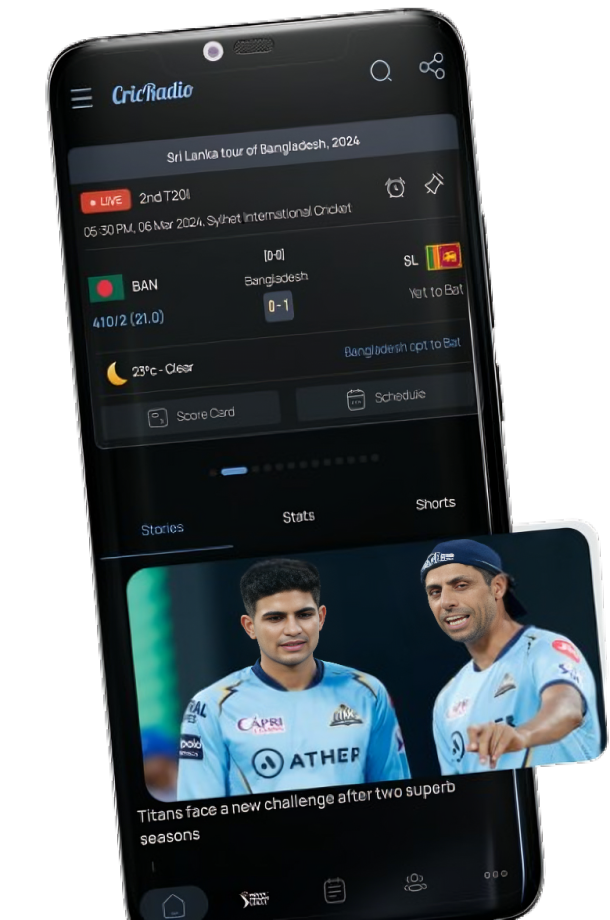
For real-time DLS system in cricket target tracking during live matches, CricRadio updates the revised target alongside every cricket score ball by ball so you're never caught off guard by a sudden shift in the equation.
Catch the match live updates, highlights, and full match coverage on CricRadio. Get fast, accurate, and ad-free updates throughout the game. Download the CricRadio app from the Play Store to stay connected. You can also get the live scores of cricket series directly on the CricRadio website for real-time coverage.
Live Cricket Score